Mrs. Leroy Cowles (Ella) lived in Binghamton, the city and county seat of Broome County at the confluence of the Chenango and Susquehanna Rivers in south-central New York.
The first European settlements emerged after the American Revolution; industry and manufacturing grew rapidly when the Chenango Canal connected to the Erie Canal in 1837.
The coming of the railroad solidified the city’s position as a center of trade and transportation.
Today, manufacturing has declined significantly, but the city retains beautiful homes and buildings of its past.
https://en.wikipedia.org/wiki/Binghamton,_New_York
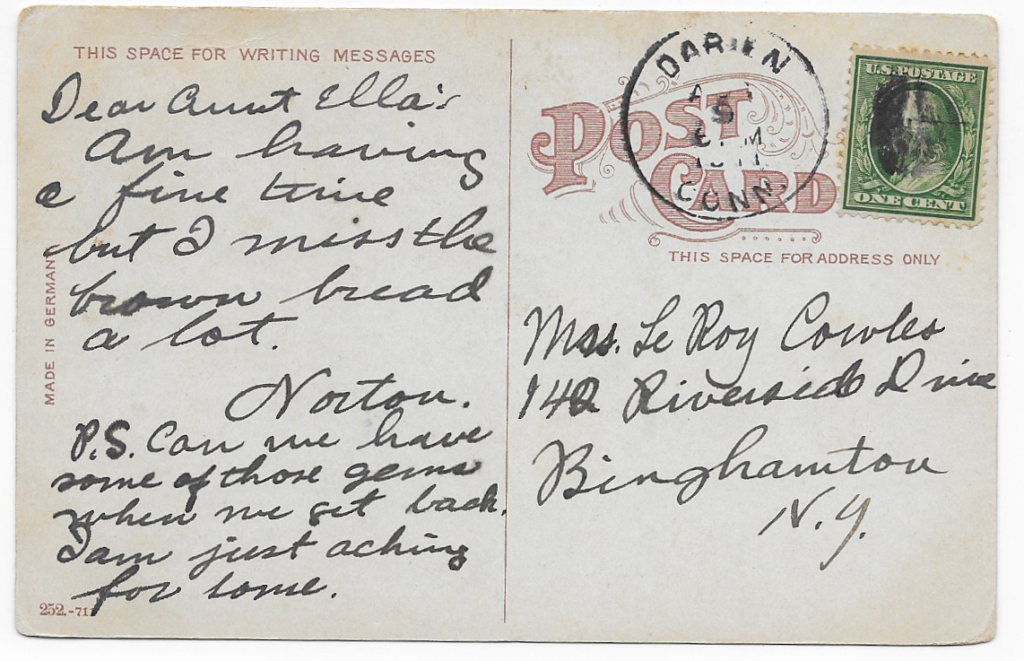
In April of 1911, Mrs. Cowles received a postcard from her nephew, Norton.
The postcard was mailed from Darien, a prosperous coastal city on the Long Island Sound in southwest Connecticut.
Originally settled by immigrants from early colonial settlements in eastern Connecticut in 1641, Darien was the site of significant conflict between patriot and Loyalists during the American Revolution.
https://en.wikipedia.org/wiki/Darien,_Connecticut
Today, two railroad stations support many daily commuter trains to Grand Central Station in Manhattan – about 40 miles to the southwest.
+ + + + + +
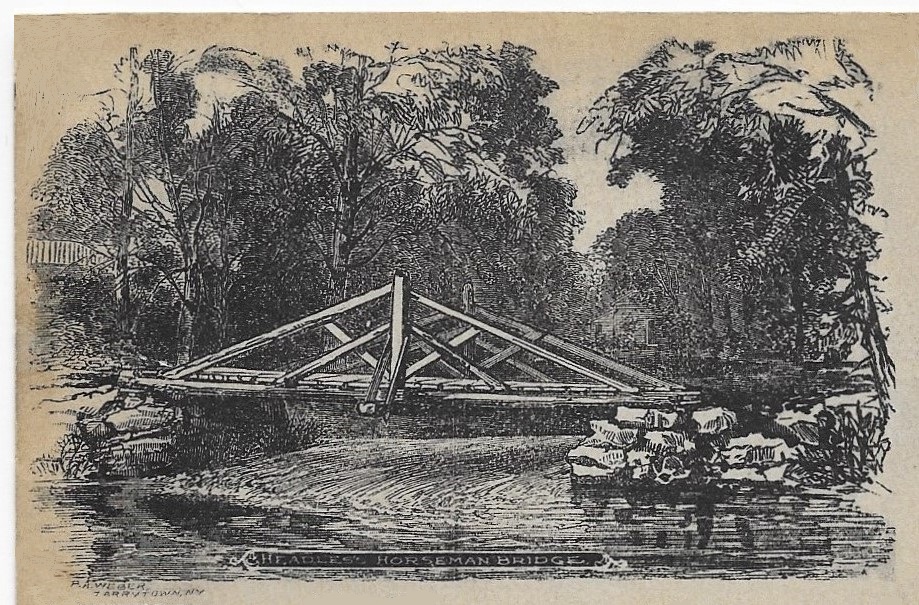
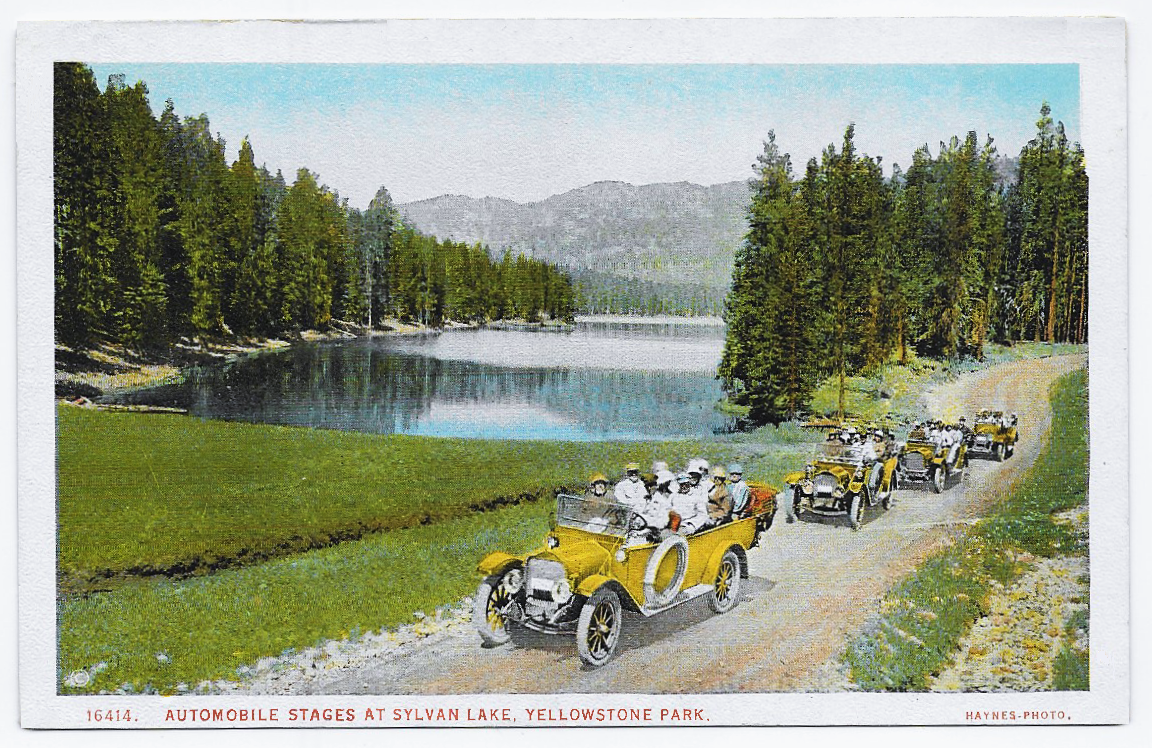
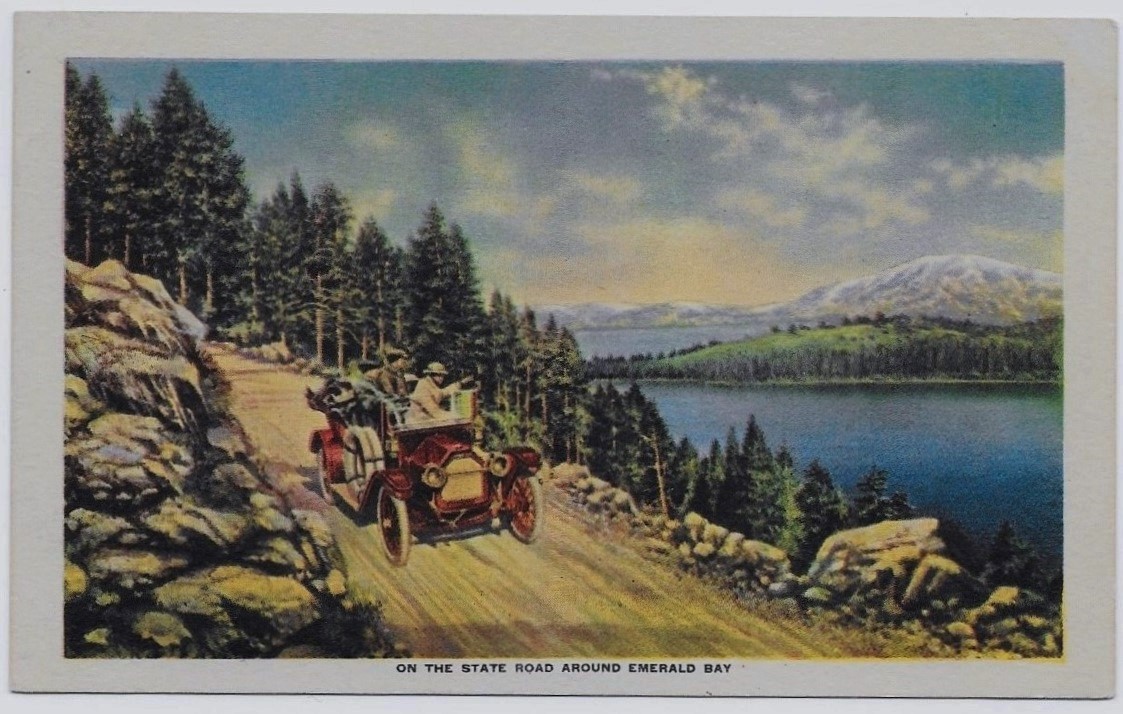
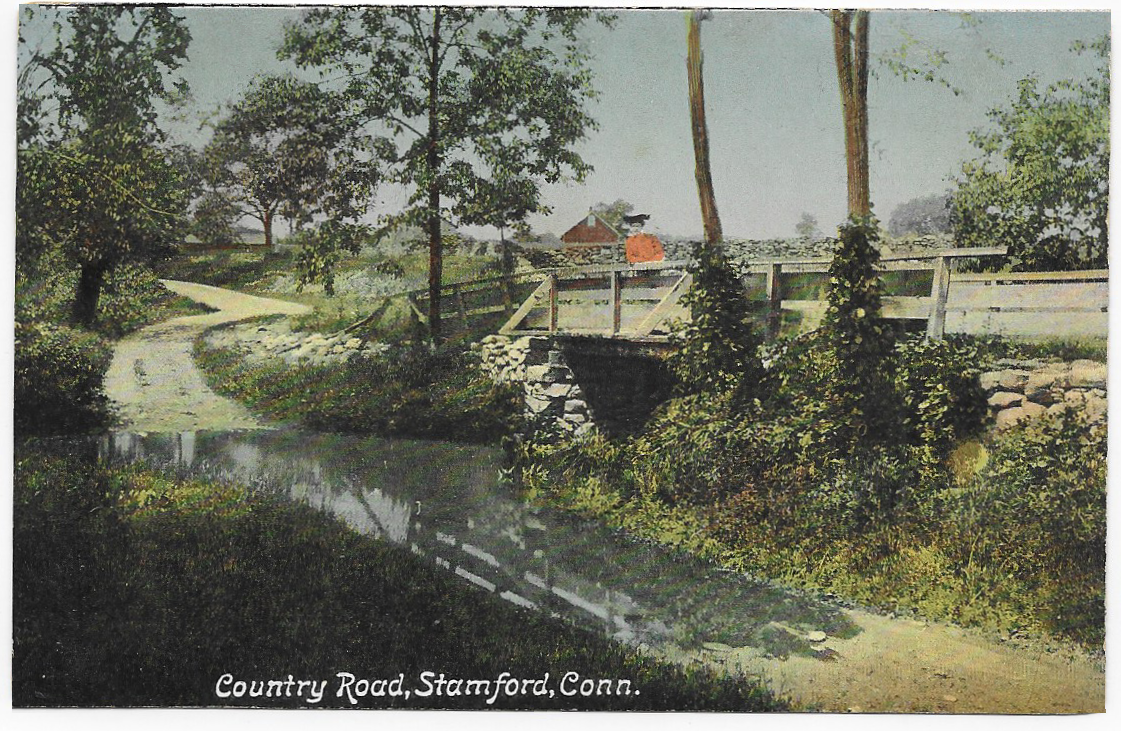
The face of the postcard is a photograph of “Country Road, Stamford, Conn.”
Stamford, another coastal city in Fairfield County of southwest Connecticut, is now the second largest city in the state – boasting a large financial district and more corporate headquarters than any place in the region outside Manhattan.
Stamford is less than five miles southwest of Darien.
https://en.wikipedia.org/wiki/Stamford,_Connecticut
On the postcard, we see a sight that must have been common in the early 20th century – an unpaved country lane passes through a stream.
A horse and wagon could easily ford the shallow waters.
Above the lane, a rustic bridge on stone piers provides a better crossing for high water, inclement weather, or for automobiles.
The postcard was “Printed in Germany”, although I could not distinguish a publisher’s mark.
+ + + + + +
On the reverse, Norton greets, “Dear Aunt Ella”.
Despite, “having a fine time”, Norton laments, “I miss the brown bread a lot”.
After signing his name, Norton adds a postscript that is longer than his message:
“Can we have some of those gems when we get back / I am just aching for some.”
Aunt Ella seems to have been pleased or amused by this testament to her baking; she preserved the postcard in excellent condition throughout her life.
One hopes that Norton returned safely from Binghamton and enjoyed many loaves of the delicious brown bread.