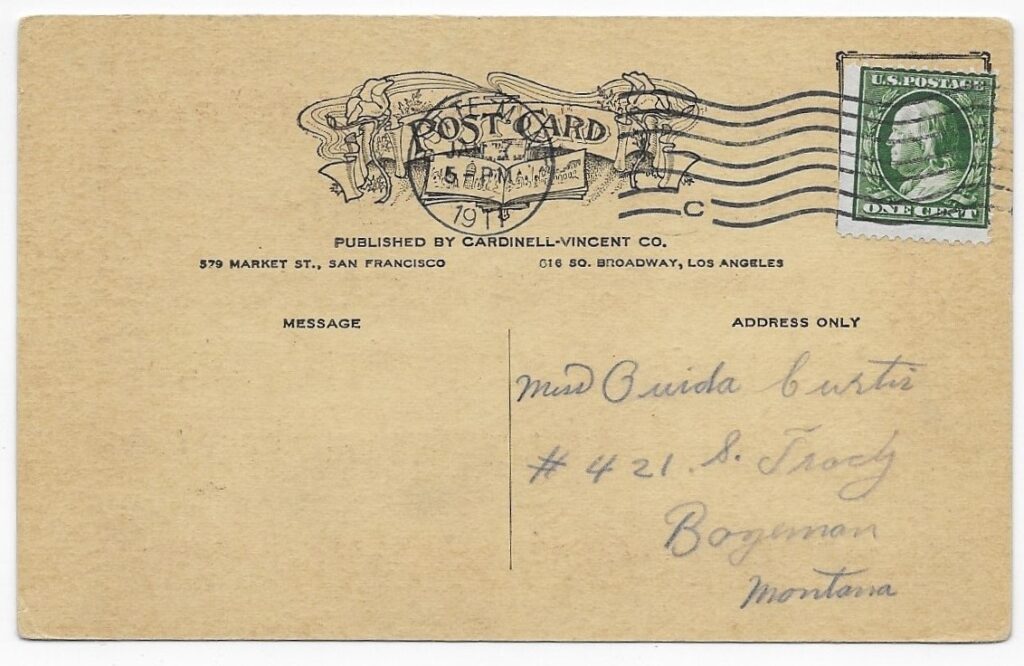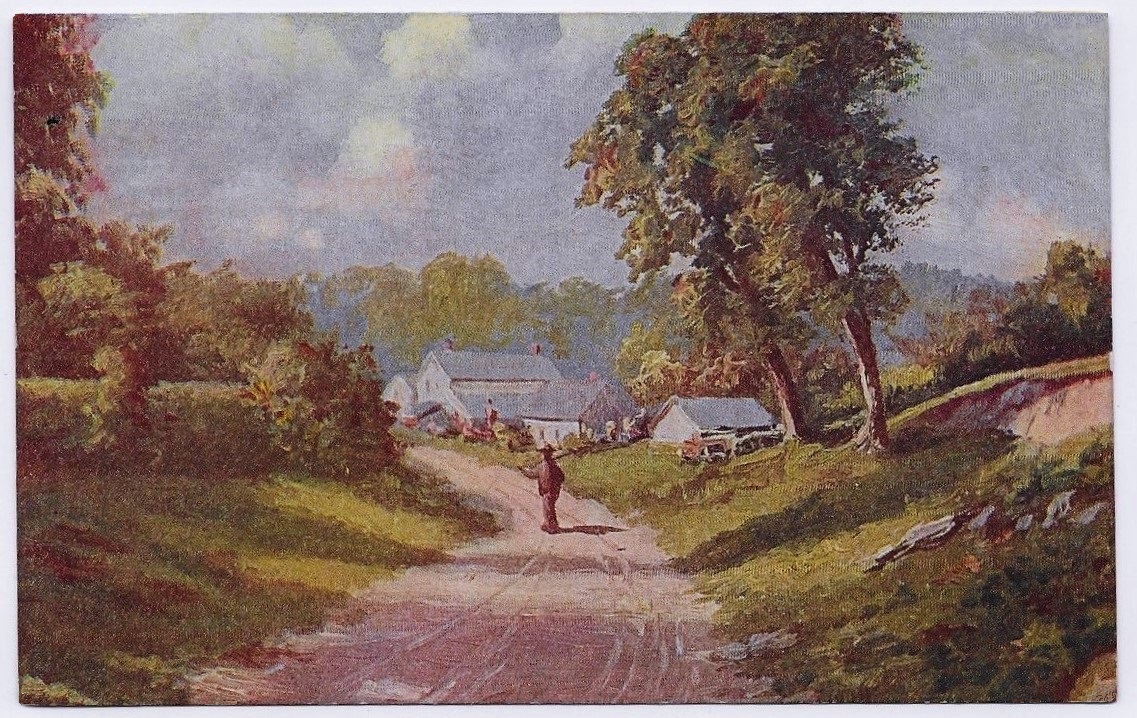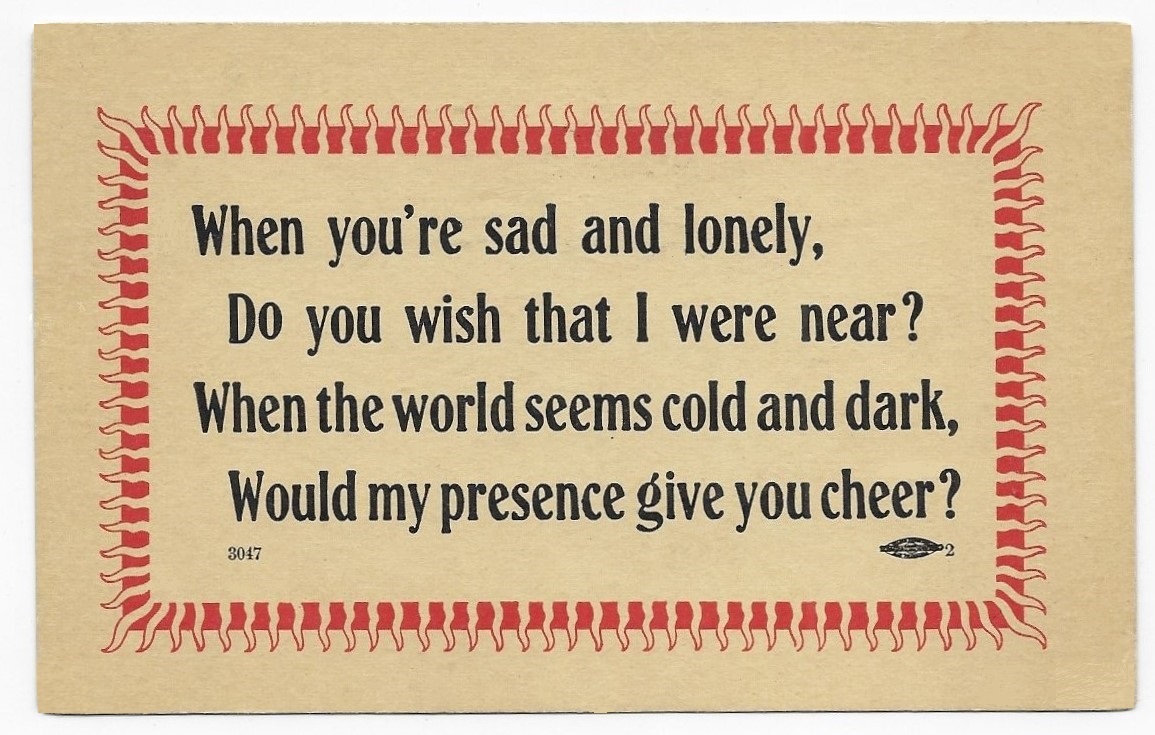
Miss Ouida Curtis lived in Bozeman, a city and county seat of Gallatin County in a high valley between mountain ranges in southwest Montana.
Originally inhabited by Crow people, European immigrants settled in the area when a northern branch of the Oregon Trail was blazed to reach mining camps beyond the valley.
The natural beauty of this “Valley of the Flowers”, and the fertile soil led to agricultural (later, cattle ranching) operations.
https://en.wikipedia.org/wiki/Bozeman,_Montana
Now a city of more than 50,000, Bozeman had a tenth of that population when the postcard was mailed.
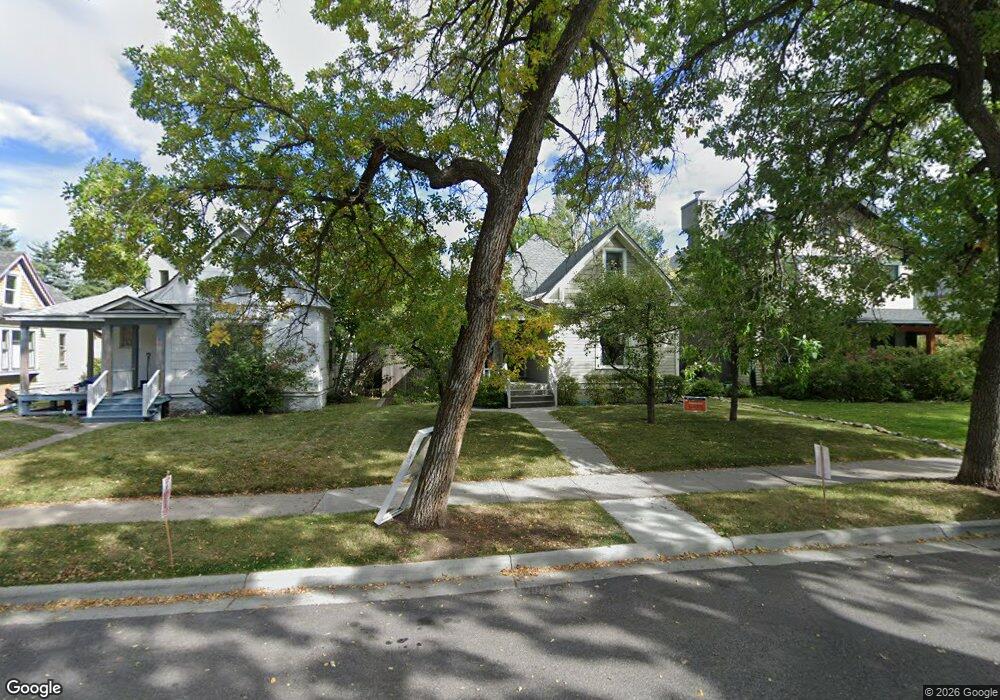
Ouida’s home at 420 South Tracey is a detached frame house on a quiet tree-lined street – it was built in 1900.
In January of 1911, Ouida received a postcard from an unidentified correspondent.
The postcard was mailed from Butte, a consolidated city and county on the Continental Divide in the northern Rocky Mountains of southwest Montana.
Founded as a mining town (primarily, copper), Butte became a boom town and was the first industrial city in Montana.
https://en.wikipedia.org/wiki/Butte,_Montana
Home to strong labor-union and socialist activism, Butte was the site of bitter suppression of mine workers in the early 20th century.
https://en.wikipedia.org/wiki/1914_Butte,_Montana,_labor_riots
Bozeman is 84 miles east of Butte.
+ + + + + +
The face of the postcard is a printed motto, framed by an ornamental border in red.
The four lines of rhymed verse asks if the presence of another is helpful or comforting:
“When you’re sad and lonely,
Do you wish that I were near ?
When the world seems cold and dark,
Would my presence give you cheer?”
The postcard was published by the Cardinell-Vincent Company of San Francisco and Los Angeles.
It was printed in the United States.
+ + + + + +
On the reverse, there is no inscription – although there is a place for “Message”.
We assume that Ouida recognized the would-be comforter.
The postcard was preserved in very good condition throughout Ouida’s life.
RESEARCH NOTE
On August 23, 1888, Ouida Cora Curtis was born in Manhattan, Montana.
(Manhattan is a town on the Gallatin River about 20 miles northwest of Bozeman.)
https://en.wikipedia.org/wiki/Manhattan,_Montana
Ouida was the daughter of William Wallace Curtis (1841-1929) and Anna Belle Cole (1862-1932).
William and Anna Belle had been married in November of 1882 and they had six daughters and two sons – all of whom lived to adulthood.
The “Family Search” website (below) links photographs of Ouida’s parents, but no picture of Ouida.
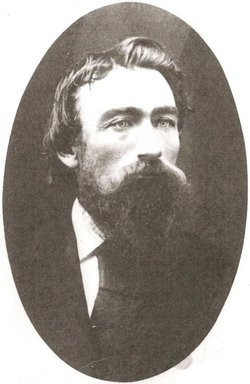
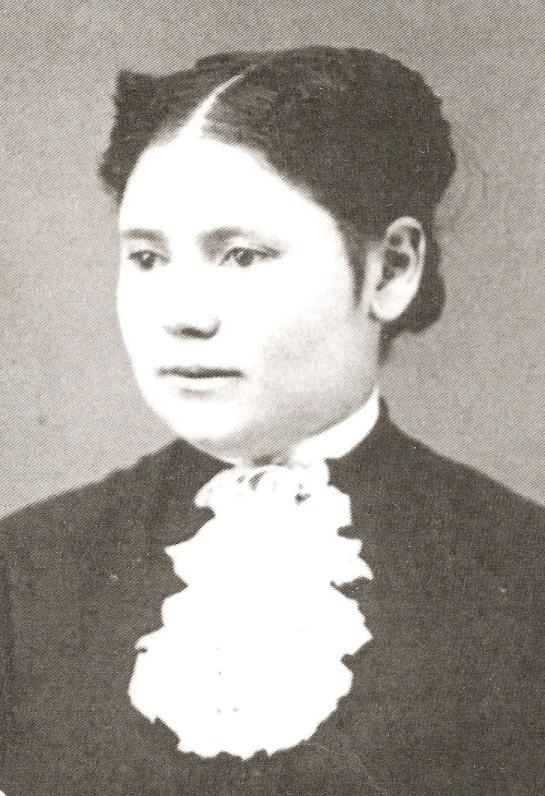
In December of 1912, Ouida married Thomas O. Campbell (1884-1965) in Roundup, Montana (the county seat of Musselshell County in the Bull Mountains, 174 miles northeast of Bozeman.)
According to her obituary, Ouida and her husband were on a homestead claim in Musselshell County, but returned to Manhattan to ranch.
By 1930, the couple had returned to Gallatin County where they remained the rest of their lives.
Ouida and Thomas had three daughters and four sons – although one daughter died at age 12 and one son died in infancy, and another son died at age 19.
https://www.familysearch.org/en/tree/person/details/K415-DNM
Thomas Wallace Campbell, the 19-year-old son, died by drowning during a picnic along the Gallatin River in 1936.
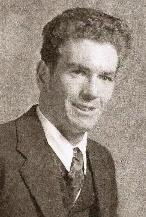
Fortunately, the youngest son lived until 2014.
After the death of her husband in 1965 (aged 81), Ouida lived as a widow until her death in Bozeman in 1969.
She was 80 years old.
Thomas and Ouida, along with Ouida’s parents and the son who drowned, are buried in the Meadowview Cemetery in Manhattan, Montana.
https://www.findagrave.com/memorial/70314310/ouida-cora-campbell