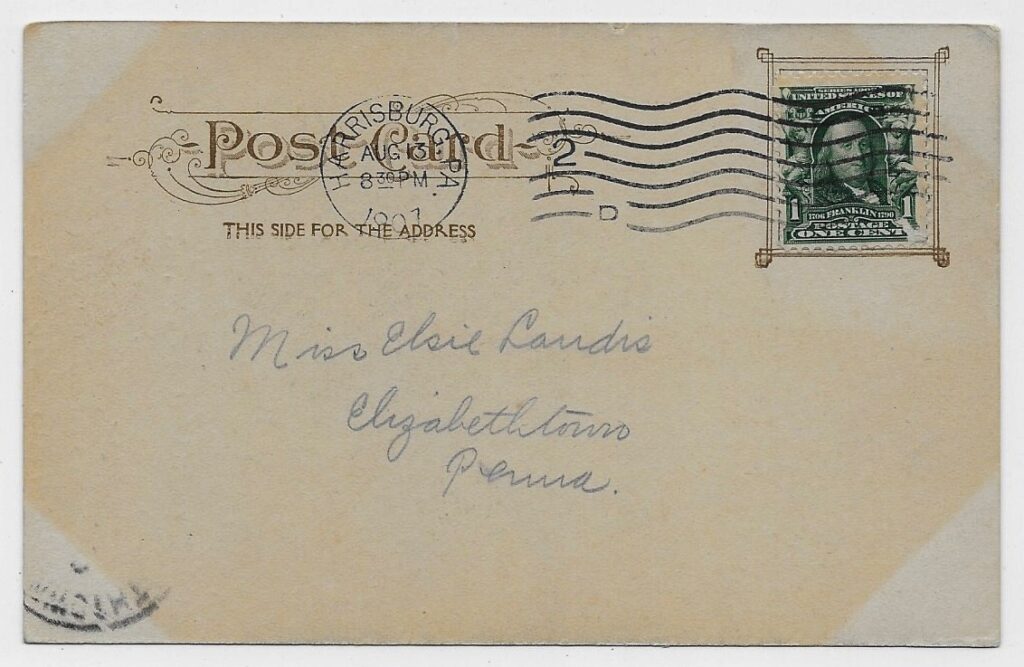
Miss Elsie Landis lived in Elizabethtown, a borough in northwest Lancaster County, PA.
During the early 20th century, the community was evolving from its agricultural roots by the growth of shoe manufacturers, a chocolate company, and the foundation of a liberal arts college.
https://en.wikipedia.org/wiki/Elizabethtown,_Pennsylvania
In August of 1907. Elsie received a postcard from Mary.
Mary mailed the postcard from Harrisburg, the capital city on the Susquehanna River in central Pennsylvania.
https://en.wikipedia.org/wiki/Harrisburg,_Pennsylvania
Harrisburg is about 18 miles northwest of Elizabethtown.
+ + + + + +
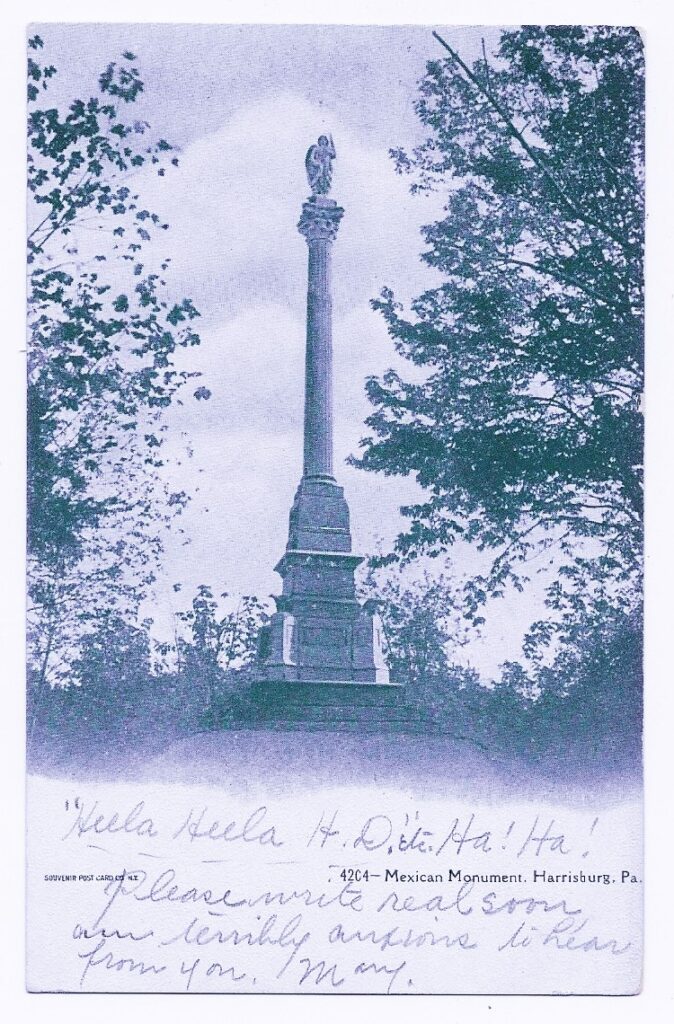
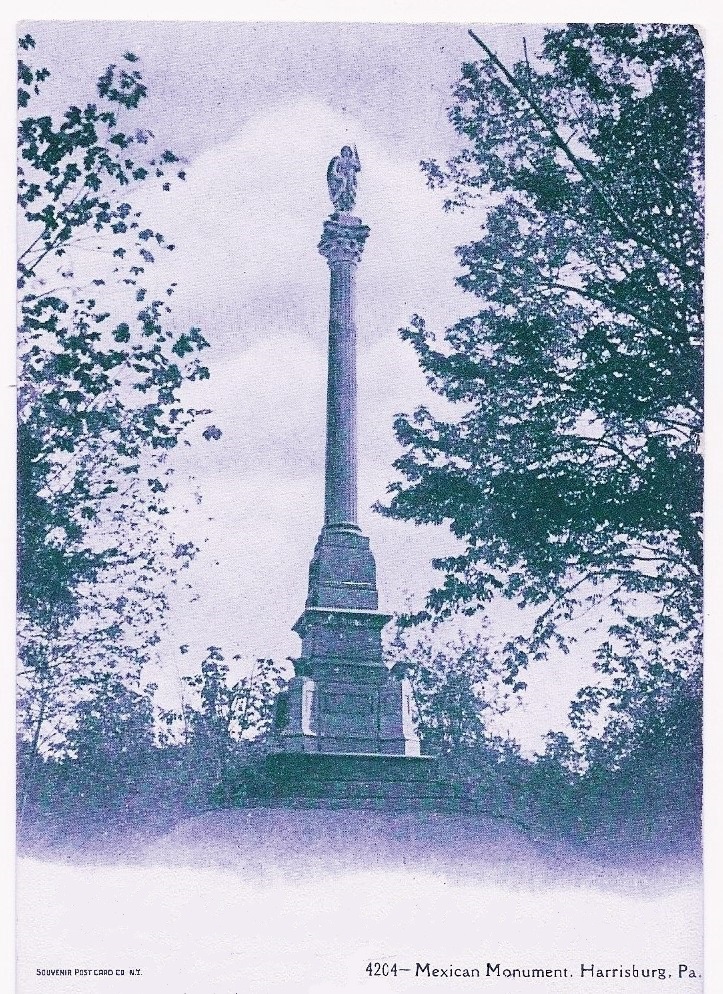
The face of the postcard is a photograph of the “Mexican Monument. Harrisburg, PA”.
Here we see a tall Corinthian column on a tiered base and pediment.
https://en.wikipedia.org/wiki/Corinthian_order
The pillar is crowned with a statue of a standing woman.
In 1858, the General Assembly passed an act authorizing a Mexican War Monument in honor of Pennsylvanians who had fought in the Mexican War (1846-1848).
https://en.wikipedia.org/wiki/Mexican%E2%80%93American_War
After reviewing proposals, the initial appropriation was found to be insufficient for the project proposals.
Only in 1867 was a plan by Hamilton Alricks, Jr. of Harrisburg adopted which met the conditions of the appropriation.
https://www.cpc.state.pa.us/projects/maintenance/mexican-war-monument.cfm
This monument was erected on the spot where the Matthew J. Ryan Building stands today.
In 1894, the monument was moved to its current location in the southeast quadrant of Capitol Park.
The postcard photograph was published by the Souvenir Post Card Company of New York.
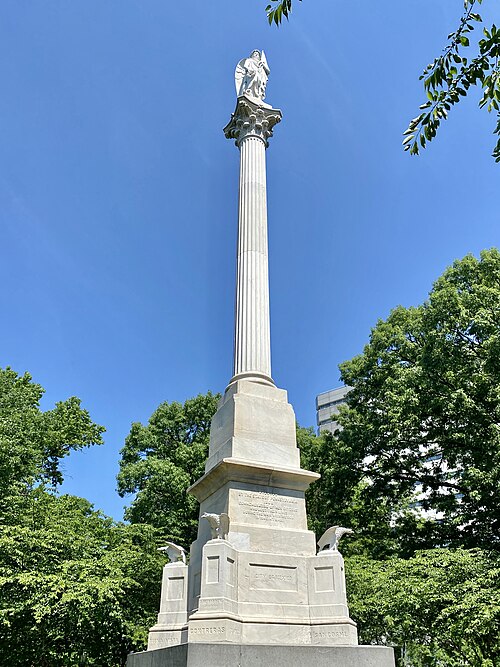
Here is a recent photograph shared from the Wiki Commons:
+ + + + + +
Because the postcard has an “undivided back”, Mary wrote a brief message on the margin of the face.
Mary begins with “Hula, Hula, H. D. etc.” and adds, “Ha! Ha!”
A preliminary internet search does not reveal the origin of the whole phrase that Mary places in quotation marks.
A Google search indicates:
“In 1910, the term “Hula Hula” was … a colloquial and often redundant phrase used in the context of the growing American “Hawaiian craze” …”.
(The territory of Hawaii was annexed by the US after a coup in 1898.)
“The word hula is the actual Hawaiian word for “dance”. The reduplication, “Hula Hula,” likely developed in English vernacular during the early 20th century as a catchy, “exotic-sounding” phrase, particularly in Tin Pan Alley songs and popular entertainment of the era.”
Mary adds, “Please write real soon – am terribly anxious to hear from you.”
Elsie preserved the postcard throughout her life.
One hopes that Elsie wrote a prompt response, and that the correspondents exchanged many more postcards.